The independent appliance repair shop across the West
Dishwasher Leaving Dishes Dirty
If your dishwasher is leaving food and film on the dishes, the fix usually comes down to water temperature, spray pressure, or a plugged filter, and you can check the first two yourself in about ten minutes. Gritty plates, crumbs stuck on the tines, cloudy glasses. Hard water out here makes all of it worse. Let's walk the usual causes, cheapest first.
Call (800) 712-6387- Real people on the phone
- 7 days a week
- Quote in writing before any work
Taking calls until 5:00 PM PT
By the Ben's Appliance Service service team · reviewed by our working technicians
What dirty dishes are actually telling you
A dishwasher cleans with hot water, spray pressure, and detergent that still has some life in it. When dishes come out dirty, one of those fell short. Chalky white film usually points at water minerals and detergent chemistry. Chunks of food left behind point at spray or drainage, and greasy, slimy dishes usually mean the water never got hot enough. Look closely before you call anyone. Is it film, or is it food? Top rack only, or everywhere? One load, or every load since last month? Those details narrow the list fast, and they save time when we show up at your door.
Cause family one: water, detergent, and loading
Start with the free stuff. Las Vegas water is hard, and scale dulls performance in every dishwasher on the valley floor. Try a fresh box of detergent, since powder and pods go stale and clumpy in a humid cabinet. Add a rinse aid and keep the dispenser filled. Run the kitchen faucet hot before you start the cycle so the machine begins with hot water instead of cold pipe water. Then check your loading. Tall pots and cutting boards block the spray arm from reaching the upper rack. Bowls facing up fill with dirty water, and nesting silverware hides half of every spoon.
Cause family two: clogged filter and spray arms
Most modern dishwashers have a cylinder filter in the floor of the tub, and it twists out by hand. Pull it, rinse it under the tap, scrub gently with an old toothbrush, and put it back seated correctly. You would be surprised what comes out of there: seeds, labels off jars, broken glass, a lot of grease. Next, spin the spray arms with your finger. They should turn freely. Hold each one up to the light and look at the little holes, because scale and food plug them and a toothpick clears them. Do both of these before anything else mechanical.
Cause family three: heat, water fill, and the pump
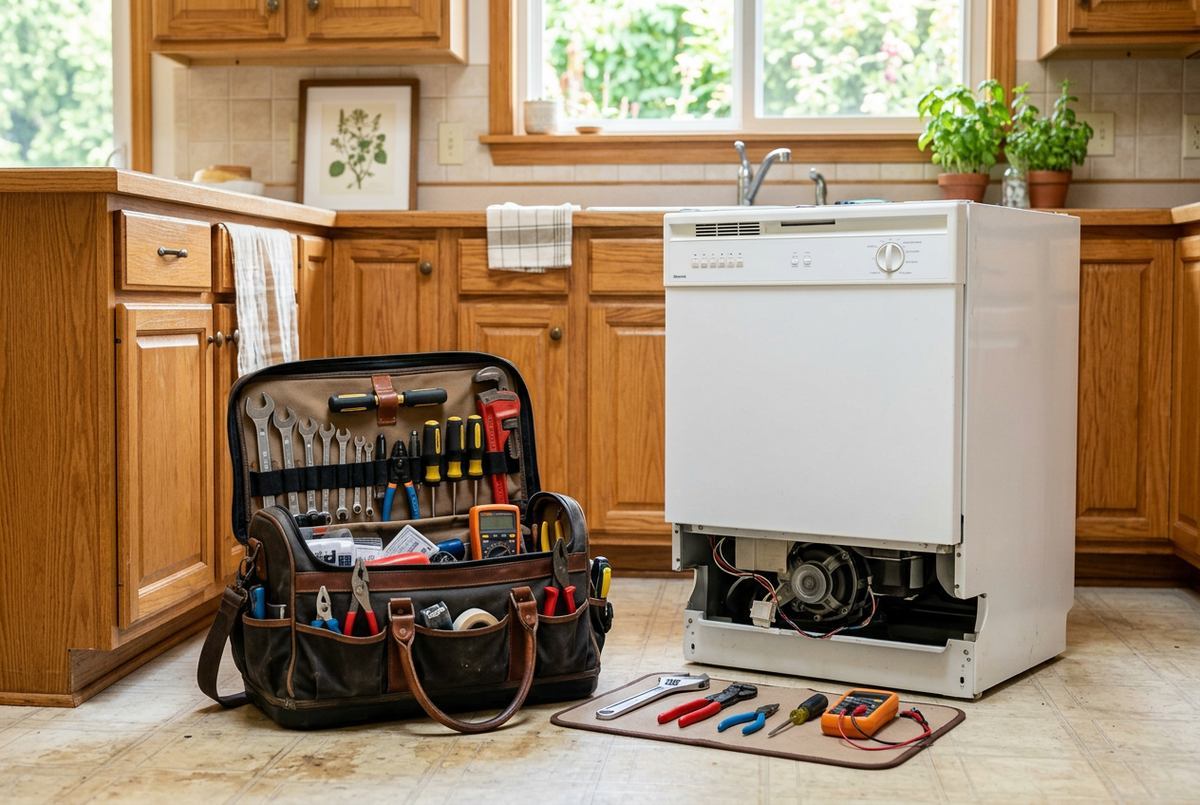
If the filter is clean and the arms spin free, the problem is likely inside. A weak wash pump can't build spray pressure, so water dribbles instead of blasting. A failing heating element leaves water lukewarm and grease just smears. A stuck inlet valve underfills the tub, so the arms sputter, and clogged drain lines leave old dirty water sitting in the bottom between cycles. You can spot the clue yourself. Open the door mid-cycle and listen. Strong steady spraying, or a sad trickle? Is there standing water at the start? Note it, then stop there. Those repairs mean opening panels, and that's ours to do.
What we do that you can't from the kitchen floor
We check actual water temperature at the tub, not the setting on the dial. We measure fill volume and time the cycle against how the machine is supposed to behave. We pull the lower panel to inspect the pump, the drain hose routing, and the heating circuit, and we look for scale buildup on the element and the sump, which is common in hard-water homes. We also check the door seal and the detergent dispenser flap, since a flap that never opens dumps soap at the wrong time. Then we tell you plainly what's worth fixing on your machine and what isn't. Call us and we'll set a time, evenings included.
Dishwasher Leaving Dishes Dirty — fast answers
Should I rinse dishes before loading?
Scrape, don't rinse. Detergent needs some food soil to work against, and rinsing everything spotless can leave film behind. Just get the big chunks and bones off, and skip anything baked hard onto a pan.
Why are my glasses cloudy but the plates look fine?
That's usually hard-water mineral film, not dirt. Rinse aid helps a lot here. If the haze won't wipe off with a vinegar-dampened cloth, the glass may be etched permanently, and no repair fixes that.
Is vinegar in the dishwasher safe to run?
An occasional cup in a bowl on the top rack helps cut scale. Don't make it a weekly habit though, since acid over time is hard on rubber seals and gaskets. A dishwasher cleaner tablet is gentler.
How it works
- Step 1
Tell us what it's doing
Ring us or fill in the form, and describe the noise, the smell, the error code and the brand. Small details help us load the right parts before we ever knock on your door.
- Step 2
We come look
Our tech tests the machine instead of guessing. You hear what failed and why, in plain words. Then you decide whether repairing it makes sense or replacing it makes more sense.
- Step 3
Repair and retest
Approved work gets done, often on the same visit. We run a full cycle before packing up, wipe down the area, then show you what changed so nothing surprises you next week.
- A real person answers
- Open 7 days
- Written quote before work starts
Why homeowners call us
- We know hard waterValley water leaves scale on everything, and we see it in clogged dishwasher jets and crusted washer valves. Water heaters groan, too. We check for mineral buildup out of habit, because around here it's usually part of the story.
- Swing-shift friendlyNot everybody is home at ten in the morning. We schedule around night shifts and split shifts, and around long commutes. Tell us the window that actually works for your household and we'll aim for it.
- Independent, not steeredNobody pays us to push a brand. We service all major makes as an independent shop, so our advice on repair versus replace comes from what we saw inside your machine.
- Straight talk on old unitsSome appliances aren't worth another part. We'll say so. If a repair is likely to buy you real time, we'll say that too, and let you pick from there.
- All major brands, gas & electricFrom Whirlpool and GE to Samsung, LG, Bosch and KitchenAid, serviced independently.
- Straight answersIf it isn't worth repairing, we'll say so, often right on the phone.
About this guide
Past the safe checks, it's a job for tools and a meter
Mention which checks you ran when you book; it speeds up the visit.
- A real person answers
- Open 7 days
- Written quotes
- All major brands
- Gas & electric
Rather not call? Get a free quote →